


What if I told you that there is a simple way to get your brand in front of the people who will influence other people it?
You’d probably push back hard. Marketing has gotten more complex, not more simple.
Sometimes we let complexity block out simplicity.
Let’s start with a simple fact: the Internet is a powerful influence on consumers interested in buying new products.
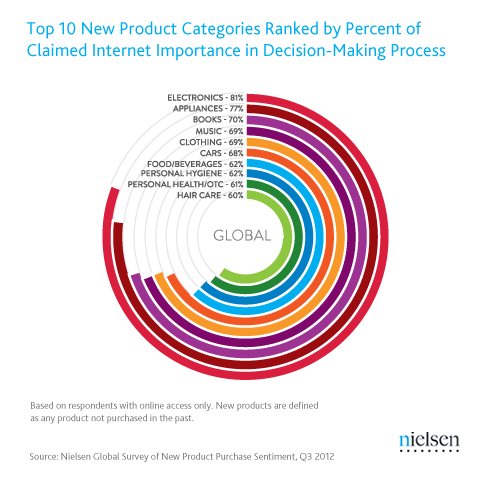
That’s the conclusion of Nielsen Global Survey of New Product Purchase Sentiment, which surveyed more than 29,000 respondents with Internet access from 58 countries about new product awareness.
In the U.S., almost sixty percent (59%) of respondents said that they were much more or somewhat more likely to purchase a new product after learning about it through active Internet research, an Internet forum (30%), a brand or manufacturer’s website (45%), or through an article on a frequently visited website (39%). Respondents also said they were much more or somewhat likely to purchase a new product after learning about it through social media (30%), a Web ad (29%) or a video posted on a video-sharing website (27%).
This trend plays out across all kinds of product categories, from electronics and appliances to personal hygiene.

The challenge with Nielsen’s conclusions is that it sets the bar high — how do I manage my marketing budget and resources in order to have my product represented in every place where consumers may be considering it?
Technorati’s “2013 Digital Influence Report” helps to narrow down that challenge.
According to the report, 56% of US Internet users say that retail sites are most likely to influence a purchase.
Those sites are covered in your distribution strategy. Check.
The next most influential site is your own brand site, which 34% of users say is likely to influence a purchase. Assuming that you’ve built the site with a user experience that helps to move prospects from consideration to purchase…then Check.
The two next most influential sources, according to users? Blogs and Facebook.
Not checked.
How do you check those two sources of information off?
You want to be confident that you have provided those sources with information about your product; that you are regularly updating them; that you are answering any questions that they might have; and that you are engaging in a purposeful dialog with them so that they present your product in an accurate and engaging way.
That is the heart of your communications strategy.
We believe that the challenge is simple, consistent with the best practices that you have developed for your brand in public relations over years and years.
All of our experience…and all of the research…shows that you can simplify the challenge of influencing the influencers in three steps:
- Design your communications plan so that it features content that can be easily distributed through myriad social channels;
- Identify and engage the most influential media channels with purpose — but define media to include anyone with a platform, an audience and a point of view.
- Track what gets engagement and reinforce it with more content and more media support.
This focus reinforces every other digital campaign and initiative that you undertake. That makes it simple.
Remember, in today’s world every influencer is a media platform; not every media platform is an influencer.


